You're Testing Your Ads With Real Money. There's a Cheaper Way.
By Jon Roland · September 15, 2026
Every advertiser is running an experiment, whether they mean to or not. You write an ad, turn it on, and watch what happens. That is a test. The only real question is how much you are paying to run it, and most small businesses are paying the steepest price there is: live ad spend, one click at a time, to learn things they could have known before the budget ever opened.
Wanting to test your ad is the right instinct. Almost everyone acts on it the expensive way. Here are the three ways that happens, and the cheaper lab hiding in plain sight.
1. You are split testing with your ad budget as the lab
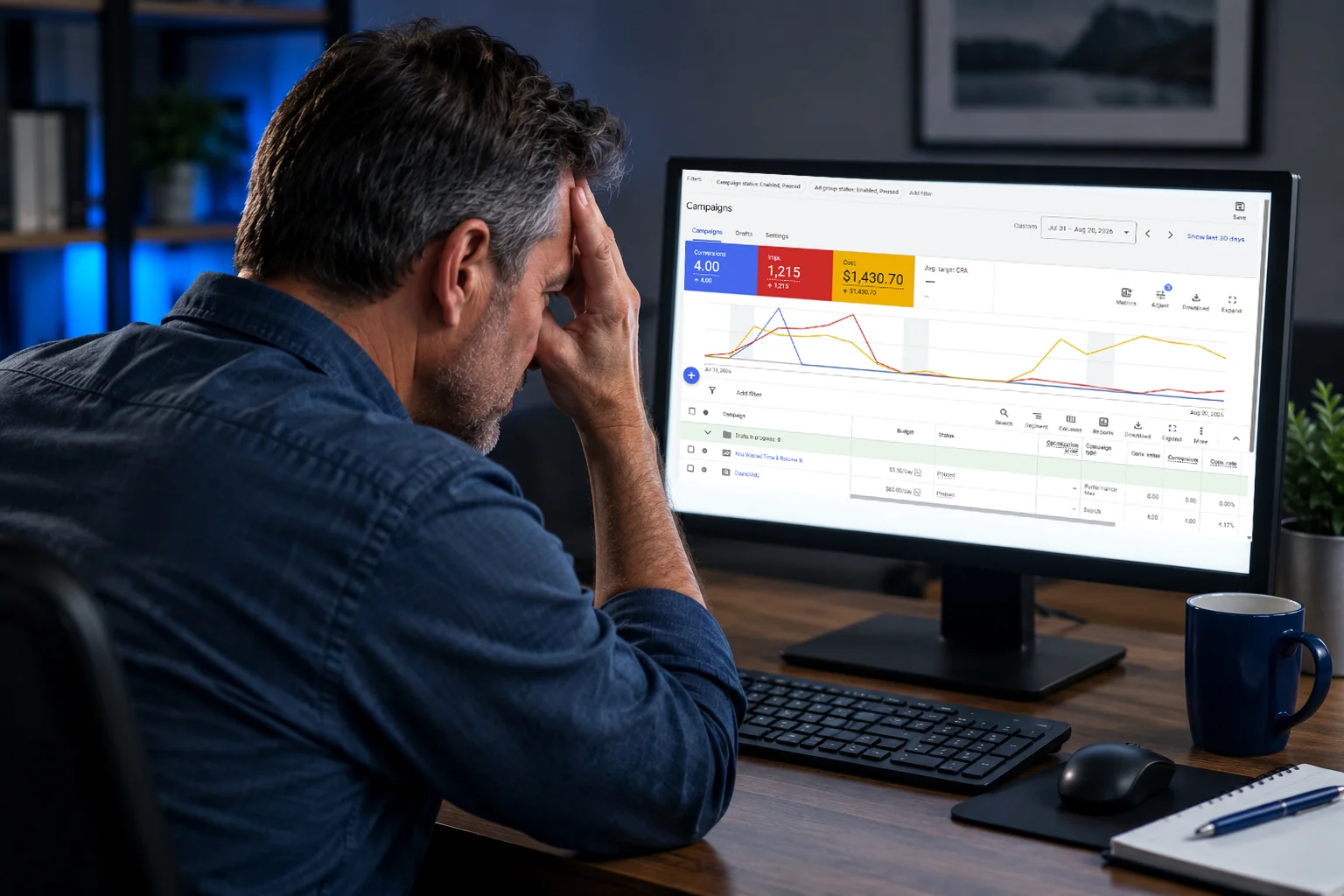
The standard advice is to run two ads and let the data pick the winner. The instinct is correct. The method is the problem. To let the data decide, you have to launch both ads and pay for every click until one pulls clearly ahead. And clearly ahead is a high bar. To trust a result instead of noise, you need roughly a hundred conversions on each version. At a five percent conversion rate that is two thousand clicks per ad, and at eight dollars a click that is sixteen thousand dollars to crown one winner.
Almost no small account can spend that, so it does not. It calls the race after thirty clicks and a couple of leads, which is not a result, it is a coin flip with a receipt. The test was real. The budget to finish it was not. You paid for data and got noise.
2. Most accounts do not even run two ads
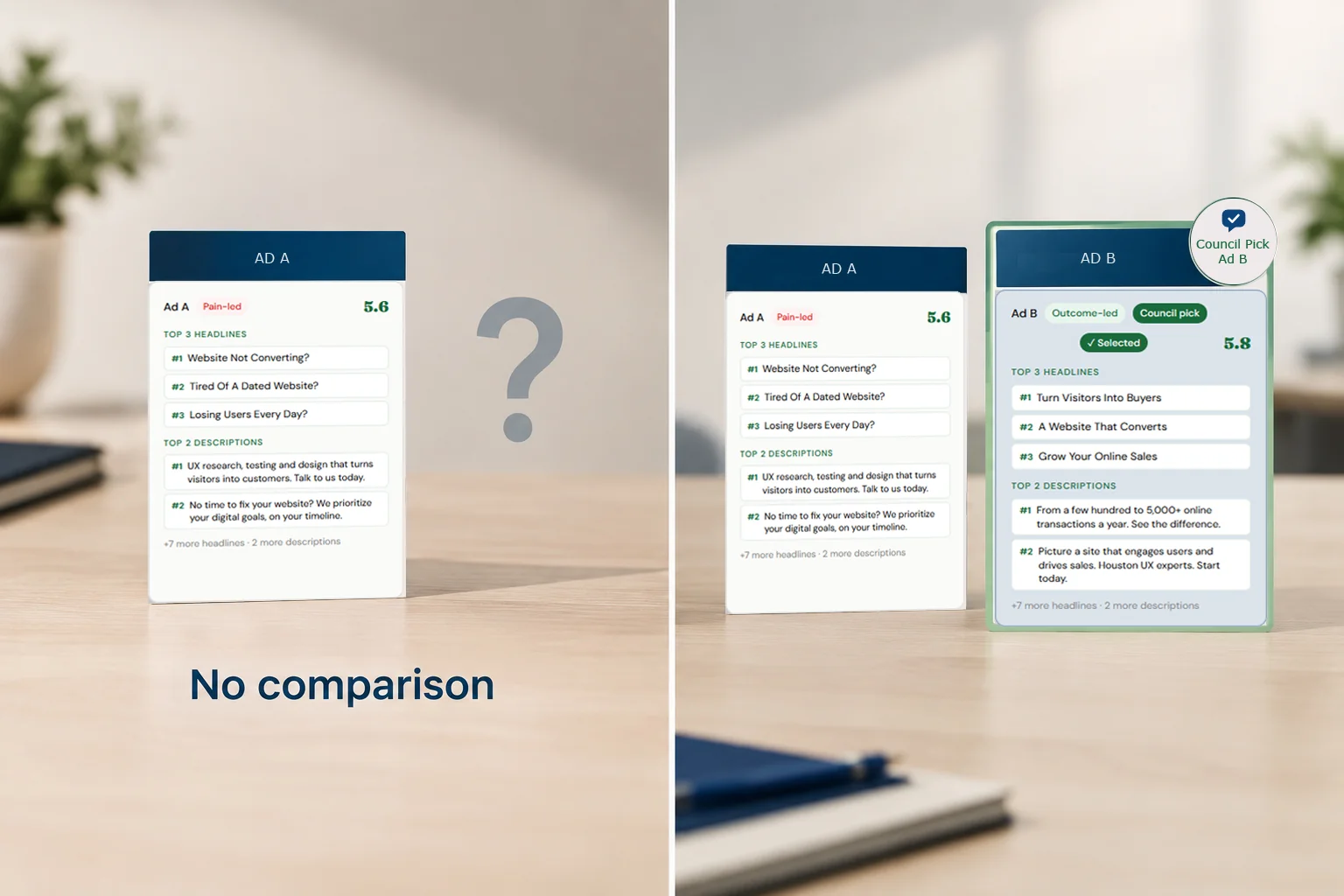
Worse than an expensive test is no test at all, and that is where most small accounts actually live. You write the ad you like, you turn it on, and you hope. One ad has nothing to beat, so it can never teach you anything. You cannot tell whether it is a strong ad or a weak one, because there is no second version to hold it against. You are not winning or losing. You are just spending, and calling the result whatever the month happened to be.
Running two ads is the floor, not the ceiling. Even a sharp writer is guessing which angle will land: the price angle or the speed angle, the fear or the outcome. The buyer settles that argument, not the writer. One ad never asks them.
3. Even a finished test tells you which, never why
Say you do have the budget and the patience, and one ad finally wins. You still learned exactly one bit of information: this ad beat that ad, this time. You do not know why. You do not know which line did the work, which objection sank the loser, or whether your winner would survive against a third angle you never tried. So the lesson does not travel. Next campaign, new product, and you are back to guessing, running the same costly experiment from scratch.
A test that costs you thousands and teaches you one word, winner, is a bad trade. The point of testing was never to crown an ad. It was to understand your buyer well enough that the next ad starts stronger than the last one did.
The pattern behind all three
Notice the through-line. Paying by the click, running a lone ad, learning which but never why. Every one of them is the same mistake: letting the market teach you lessons you could have learned before you paid for them. The market is an honest teacher and a brutally expensive one. It charges full price for every lesson, and it grades slowly.
We have written about why ads stop converting and why AI ad copy comes out generic. This is the discipline underneath both: decide with your buyers before you decide with your budget.
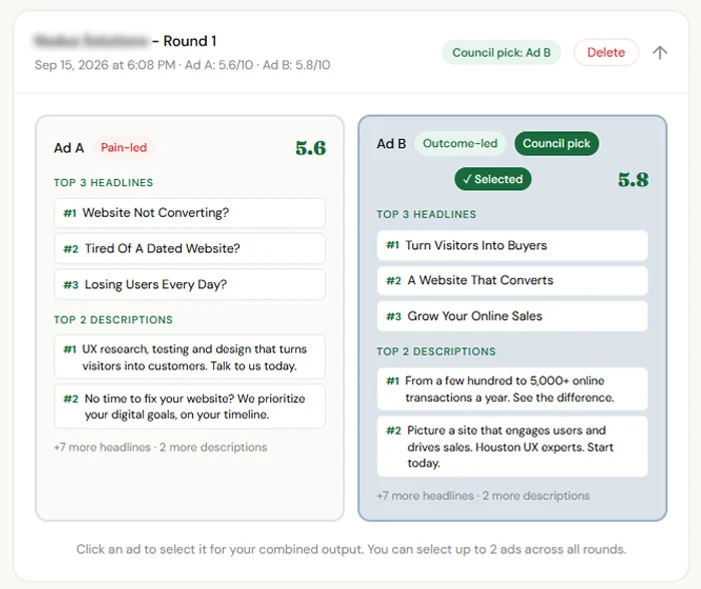
That is the exact gap CouncilAds was built to close. Instead of one ad and a hope, it writes two competing ads for your product, one is pain led and the other is outcome led, then runs both past a council of 12 buyer personas, each conditioned on real small business buyer psychology, from the price-sensitive skeptic to the ready-to-buy decision maker. They tell you which ad wins, and the part that actually matters, why it won: the line that landed, the objection that stopped the other one, the buyer who would have scrolled past. It is an ad tester that runs before your budget, not after, and it works the same whether you are running Google, Meta or reddit ads. You get the verdict, and the reason behind it, while it is all still free to change.
If you want more breakdowns like this, you can Add CouncilAds as a Google Preferred Source on Google - https://google.com/preferences/source?q=councilads.com - so our Council Notes show up when you are searching for real answers about your ads.
You are going to test your ad no matter what. The only choice is where. Test it in the market and pay full price for every lesson, or test it against your buyers first and walk in already knowing which ad to run and why. Decide before you fund it.
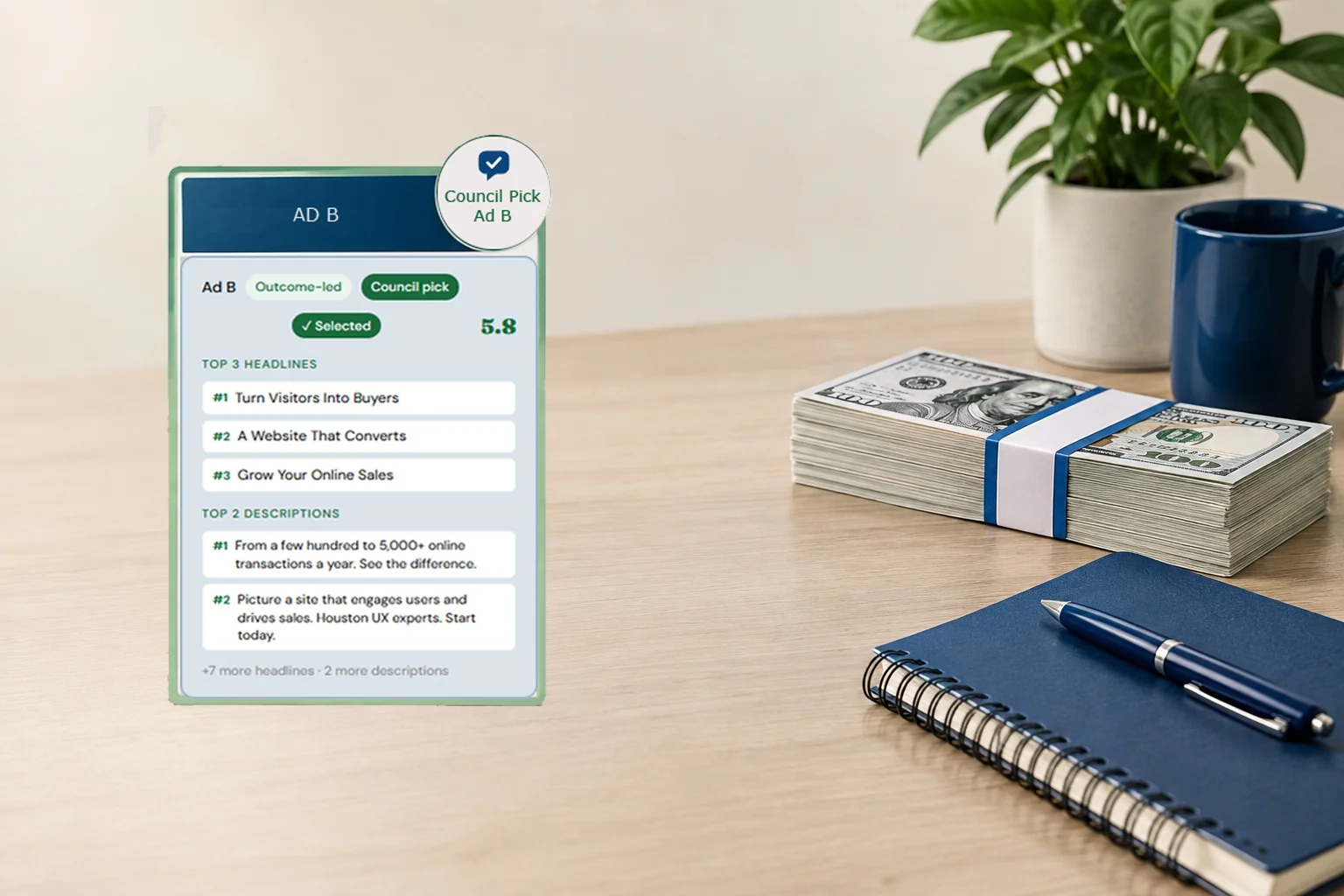
Ready to see which of your two ads wins, and why, before you pay for a single click? Test your ad free at councilads.com. 6 free runs, no credit card required.