Before You Boost That Facebook Ad, Let 12 Buyers See It First
By Jon Roland · October 23, 2026
The Boost button might be the most expensive button a small business ever taps. You write a Facebook post, it does alright, and Facebook offers to show it to more people for a few dollars. You tap it. The money starts moving. And more often than not the reach goes up and the leads do not, because boosting an ad is not the same as knowing the ad is any good.
Facebook ads fail for the same human reasons Google ads do, but the feedback is even blurrier. On Google, at least someone typed a search, so there was intent to work with. On Facebook nobody was looking for you. You interrupted them. That raises the bar, and it hides the failure, because a person who scrolls past your ad leaves no trace at all. Here are the three ways a Facebook ad quietly dies, and how to catch them before you boost.
1. The image talks first, and it is often saying the wrong thing
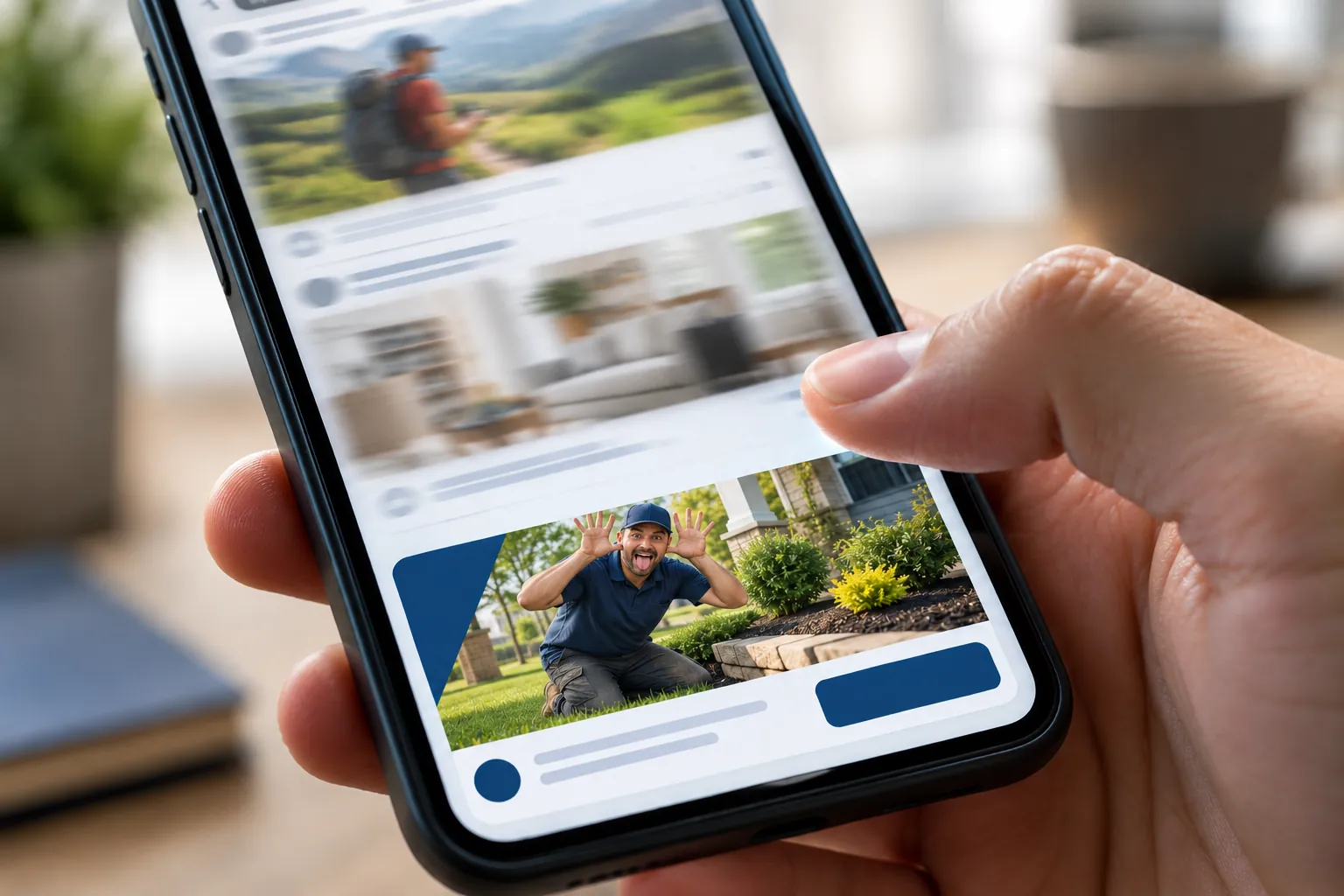
On Facebook the scroll is fast and the image speaks before a single word is read. A generic stock photo, a busy graphic with six things happening, a picture that could belong to any business in any industry, and the thumb keeps moving. Your copy never gets a chance, because the image already lost the half second that mattered.
Most owners agonize over the words and grab the first image that is not terrible. On a visual-first platform that is backwards. The image is the headline. It has to stop the scroll and hint at the one thing you do for the one person you do it for.
What to do: judge the image the way a stranger will, in half a second, mid-scroll, on a phone. Does it stop you? Does it look like you specifically, or like everyone? If it could be any company's ad, it is working for none of them.
2. The copy is written for a reader who is not there
The second failure is writing Facebook copy as if the reader came looking for you. They did not. There is no search intent here, no problem freshly typed into a box. There is a person half-watching the feed between other things, and your ad has to earn the attention it just interrupted.
That means the same silent objections we wrote about in the silent no hit even harder. Is this for someone like me. What will it cost. Why should I believe you. On Google the searcher was already leaning in. On Facebook you have to answer those questions and give them a reason to care, before they have decided to care about anything at all.
What to do: name your buyer and their moment in the first line, and lead with the thing they would want even though they were not looking for it. Do not open with your company. Open with them.
3. You boosted when you should have tested

Here is the one that costs the most. Boosting feels like taking action, so it feels like progress. But boosting is just paying to show more people an ad you never tested. If the ad was weak, all boosting does is buy a bigger audience for a message that was not going to land. You do not learn why it failed. You just spend more to fail wider.
We made this case for search in the ad tester post: testing in the market, by spending, is the slowest and most expensive way to find out if an ad works. On Facebook it is worse, because the Boost button makes it feel effortless. The cheaper answer is to get a read before the money moves, not after.
The pattern behind all three
Every one of these comes from the same blind spot. On Facebook you are interrupting a stranger who was not looking for you, so the ad has to do all the work. The image has to stop them, the copy has to earn them, and the whole thing has to be right before you pay to reach more of them. And the failure is silent. Nobody comments "I scrolled past because your image looked generic." They just keep scrolling, and all you see is spend with nothing to show for it.
You do not have to boost to find out. Take the Facebook ad you are about to run, the copy and the image, and paste both into CouncilAds. A council of 12 buyer personas, each conditioned on real small business buyer psychology, from the price-sensitive skeptic to the ready-to-buy decision maker, looks at your ad the way your real buyer would mid-scroll. They tell you who stops, who keeps scrolling, whether the image earns the pause, and the exact reason the ones who left did not care. It is the honest read the Boost button never gives you, and you get it before a dollar moves.
To be clear on how that works: CouncilAds writes and tests Google text ads, and its council will review any ad you paste in, Facebook copy and images included. So even though you built that Facebook ad yourself, you can still hear from your buyers before you fund it.
If you want more breakdowns like this, you can Add CouncilAds as a Google Preferred Source on Google - https://google.com/preferences/source?q=councilads.com - so our Council Notes show up when you are searching for real answers about your ads.
The Boost button is designed to feel like the finish line. It is really the starting line, and it charges admission. Before you tap it, find out whether the ad would have worked at all. Show it to your buyers first, then boost the one that already won them over.
Ready to see what a real buyer thinks of your Facebook ad before you boost it? Paste your ad, the copy and the image, free at councilads.com. 6 free runs, no credit card required.