Artificial Audiences: Can AI Really Stand In for Your Buyers?
By Jon Roland · September 2, 2026
You have probably heard the pitch by now. Run your ad past a panel of AI buyers before you spend a dollar, and they will tell you who clicks and who scrolls past. If your first reaction is a raised eyebrow, good. You should be skeptical of any tool that claims to know your customer. Many of them do not.
So we are not going to ask you to take our word for it. Two independent research teams have put the core idea to the test: can an AI actually stand in for a real human buyer? Here is what they found, and where the whole thing holds up or falls apart.
A Harvard study put an AI in the buyer's seat
In a Harvard Business School study, researchers set out to answer a simple question. Does an AI behave like a real shopper, or does it just make up things that sound good? They ran a large language model through classic market research setups and checked its answers against what economics says real people actually do.
It held up. When they raised the price, the AI's demand dropped, the way real demand curves slope down. When a product had better features or a stronger brand, the AI was willing to pay more for it, in the right direction and often the right ballpark. It even reproduced well-known quirks in how people shop. In plain terms, the model did not just hand back opinions. It behaved like a market.
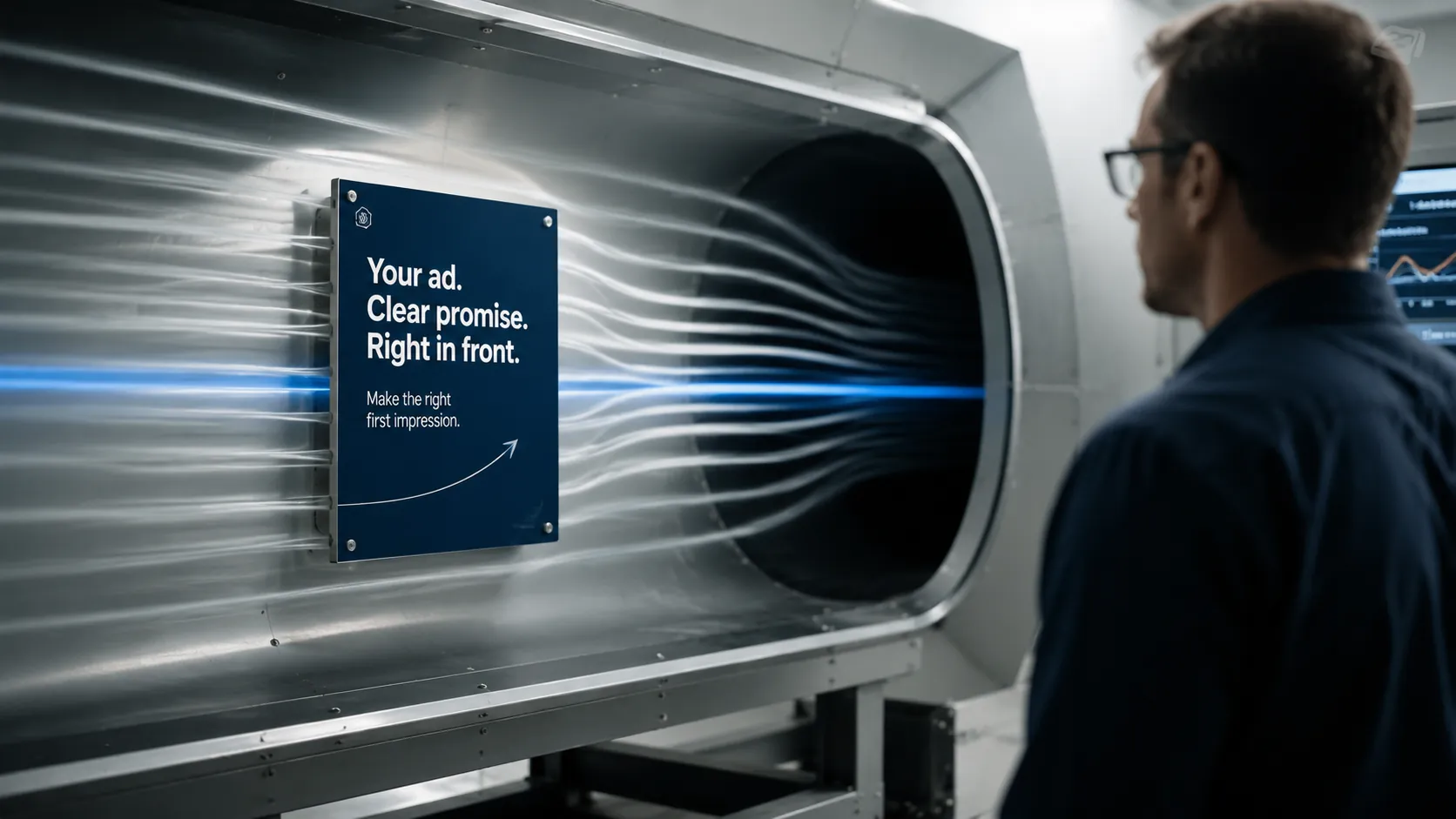
Here is why that matters for your ad. It is the difference between a magic 8-ball and a wind tunnel. A magic 8-ball gives you a random answer that feels like guidance. A wind tunnel gives you a reading that tracks reality closely enough to make a decision before you build the real thing. The Harvard work is evidence that a well-run AI panel sits much closer to the wind tunnel.
The second study named the thing that makes it work
A separate study, published in the journal Political Analysis, went further. It asked whether an AI could stand in for specific groups of people, not just people in general. The researchers fed the model thousands of real people's backgrounds, their age, their politics, their region, the whole picture, and then compared the AI's answers to how those actual groups had answered real surveys.
The match was close, and not just on the surface. The model reproduced the way different groups genuinely responded. The researchers gave this property a name: algorithmic fidelity. Their finding, in their own words, is that with "proper conditioning" the model will "accurately emulate response distributions from a wide variety of human subgroups."
Read that quote twice, because the whole thing turns on the first two words. Proper conditioning.
The entire game is in the conditioning

Here is the part the hype merchants skip. Neither study found that AI magically knows people. Both found something more useful and more honest: an AI can emulate a specific group when it is fed the right information about that group first. Left generic, an AI asked "would you buy this?" is close to worthless.
That one word, conditioning, is the difference between a party trick and a tool. Ask a blank chatbot to rate your ad and you get a confident, agreeable, meaningless answer, because it wants to please you. It does not want to scroll past your ad the way a tired homeowner does at 9pm with a dead AC. The research is clear that the value was never in the AI itself. It is in how carefully the buyer is built before the AI ever sees your ad.
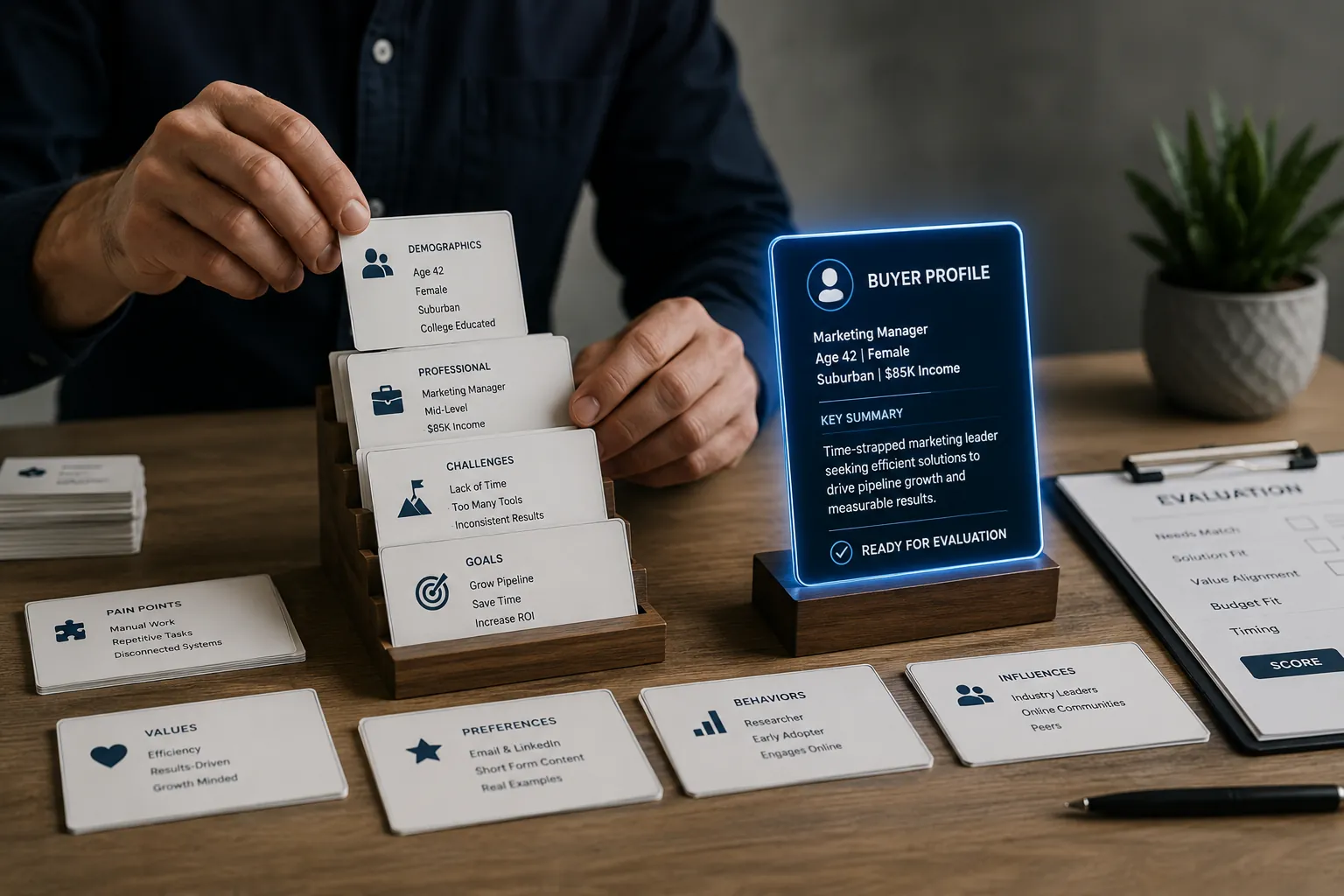
There is more than one way to do that building. One route conditions the AI on who the buyer is: age, income, region, the demographic facts. That is the route the second study took, and it works. The other conditions it on how the buyer thinks and feels: what they say, what they quietly worry about, what they are trying to get done, the pains that stop them and the gains that move them. Marketers already have a name for that second approach. It is the empathy map, a way of getting inside a customer's head that predates AI by decades. Hand an AI a real empathy map and you are not describing a demographic. You are handing it a working model of a decision.
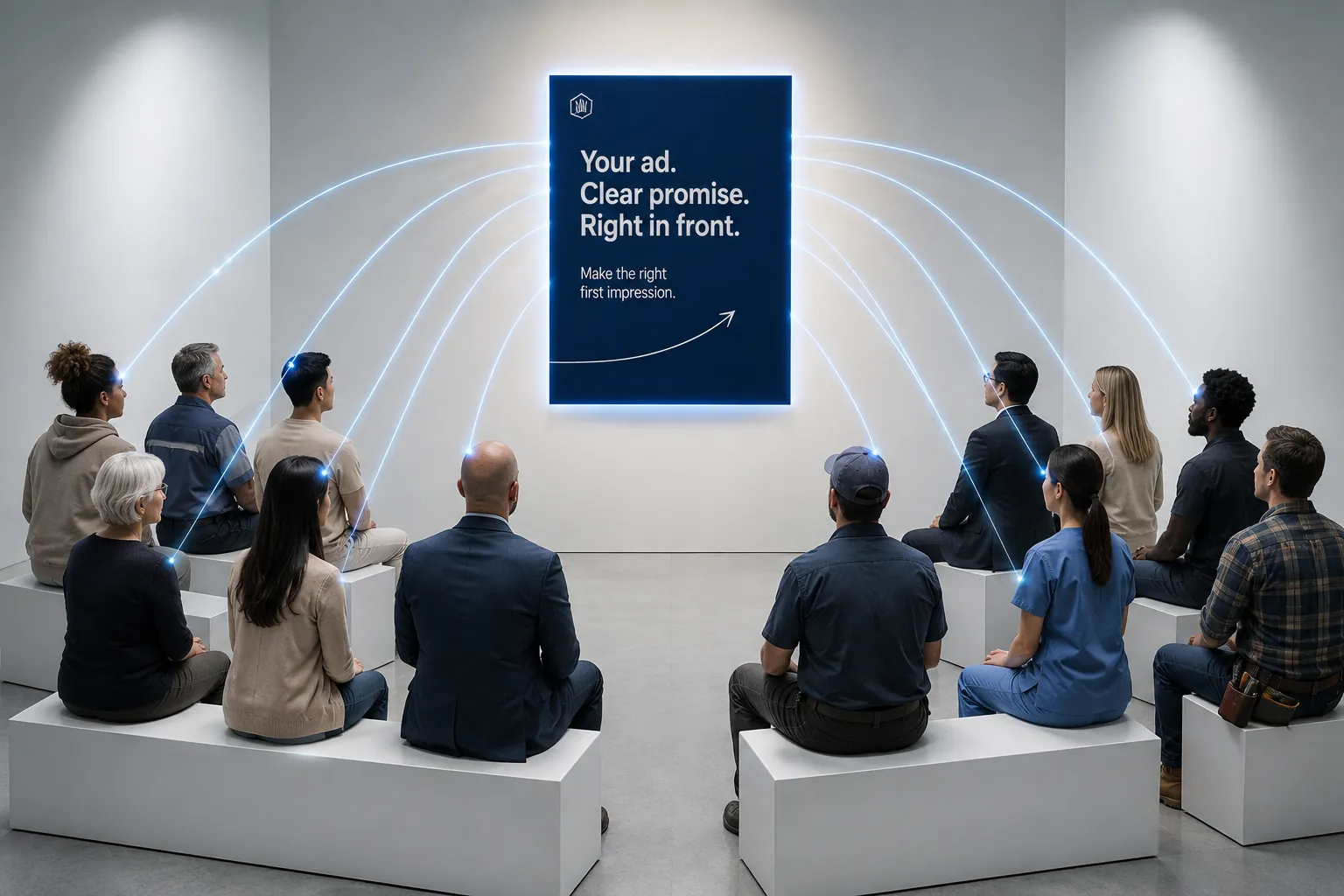
That second route is the one CouncilAds is built on. Before you spend a dollar, CouncilAds runs your ad past a council of 12 buyer personas, each conditioned not on a demographic profile but on a full empathy map of a real small business buyer, from the price-sensitive skeptic to the ready-to-buy decision maker. They are not one generic AI asked to be nice. They are twelve specific buyers built to react the way your market reacts, and they tell you who would click, who would scroll past, and the exact objection that would stop the sale. The research explains why conditioning works. The empathy map is how we do it.
What this means before your next campaign
You no longer need a focus group and three weeks to get a real read on an ad. Two independent studies, one of them out of Harvard, say a properly built AI panel can emulate how real buyers respond, closely enough to catch the ad that was going to flop before you paid to find out. But the same research draws the line in bright paint: the reading is only ever as good as the buyers behind it.
We have written before about why ads fail, and how to fix the copy, the match, and the aim. This is the layer underneath all of it. It is a way to test the fix against real buyer reaction while the ad is still free to change.
If you want more breakdowns like this, you can Add CouncilAds as a Google Preferred Source on Google - https://google.com/preferences/source?q=councilads.com - so our Council Notes show up when you are searching for real answers about your ads.
The skeptic's question is the right one to ask. Can an AI really stand in for your customer? The honest answer from the research is yes, but only when the buyer is built with care first. That is the part we obsess over, so you do not have to.
Ready to see what 12 conditioned buyers think of your ad before you pay for a single click? Test your ad free at councilads.com.